Understanding Creatine
The Science of Creatine
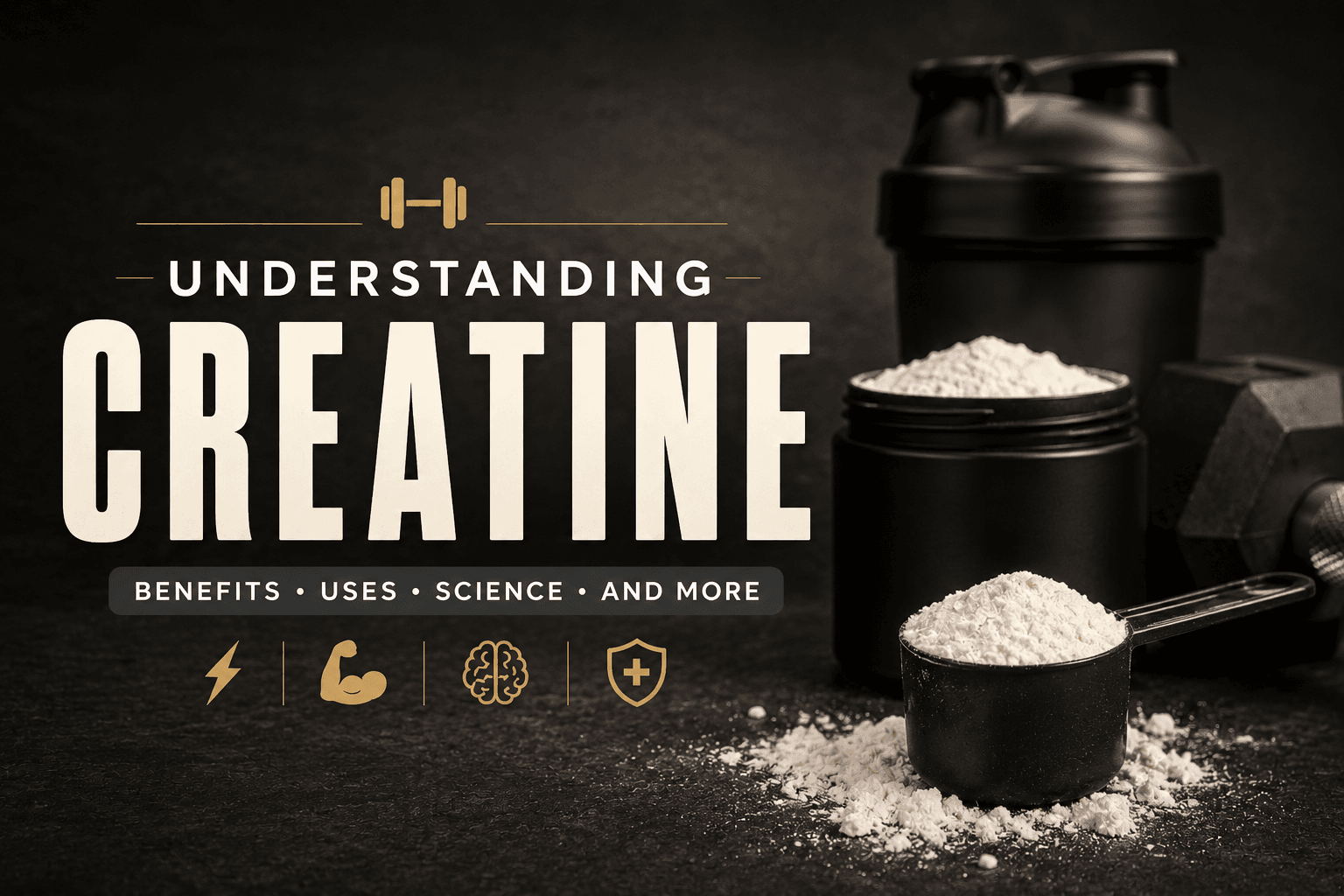
Creatine is a non-essential nutrient derived from the amino acids Arginine and Glycine. Creatine can also be obtained from food sources, primarily animal products such as; meat, fish and dairy. Creatine is stored within the muscle tissue in the form of Creatine Phosphate and plays a key role in the production of ATP (Andenosine Triphosphate), a molecule that is essential for muscle contraction. The phosphate molecule can be donated to ADP (Andenosine Diphosphate) molecules, producing more ATP to be used for more muscle contraction.
Creatine has been shown to promote an increase in power, total repetitions and amount of weight moved on any given exercise. Due to it’s role in producing ATP and therefor force production, it is used by many types of athletes from bodybuilders and powerlifters, to footballers and fighters in order to improve athletic performance.
More recent evidence has also shown that supplementing creatine may aid in recovery by activating ‘satellite cells’ which play a key roll in the repair of physical muscle tears. In addition, small-scale increases in the production of anabolic (growth promoting) hormones such as; growth hormone, tesosterone, estrogen and insulin have been shown to occur when supplementing additional creatine. This in turn may improve recovery periods between training sessions.
Fuel for the Brain
An often overlooked benefit of supplementing creatine is its role in both short and long-term brain health.
Your brain takes up around 20% of your daily energy expenditure when at rest. This energy demand, in the form of ATP, is met with the help of creatine stores within the brain itself but can also utilise creatine stores from elsewhere within the body. Long term creatine supplementation has been shown to be neuroprotective, preventing the degeneration of neurons and the resulting onset of conditions under the umbrella name Dementia.
Water Retention and ‘Side Effects’
Due to the osmotic nature of creatine, water retention and the resulting weight gain are common ‘side effects’. However, this water retention only serves to increase the volume of muscle tissue and does not lead to fat gain or subcutaneous water retention. Due to creatines poor water solubility, it can sometimes remain undissolved in the gastrointestinal tract, which could cause some discomfort. In order to prevent this it is recommended that you consume between 3 to 4 litres of water per day with around 600ml of this being drank during the consumption of the creatine.
Kidney distress is a common concern, especially amongst parents, regarding their children taking creatine. You’ll be happy to know that after over a century of research there is no correlation or causation between daily creatine consumption and kidney distress, assuming adequate hydration is present.
The National Institute of Health (NIH) have concluded that even the supplementation of 30g creatine per day is safe for healthy individuals, even over a long term study of 5+ years.
The Forms of Creatine
Whilst Creatine Monohydrate is the most commonly used and cheapest form of creatine, other forms such as Creatine HCL are more water soluble and can be taken in smaller doses. This leads to a lower likelihood of stomach distress and / or bloating. This makes Creatine HCL a great option for anyone with gut health concerns or any condition they wish to avoid aggravating.
Conclusion
In conclusion, creatine is the most widely used and researched supplement on the market and a number one choice for anyone wanting to get the best gains per £ for their hard earned cash. Creatine monohydrate can be taken for just pennies per day, has numerous benefits; long term, short term, physical and neurological.
Whether you’re a competitive athlete or a casual gym goer, creatine will be an amazing addition to your supplement regime.